
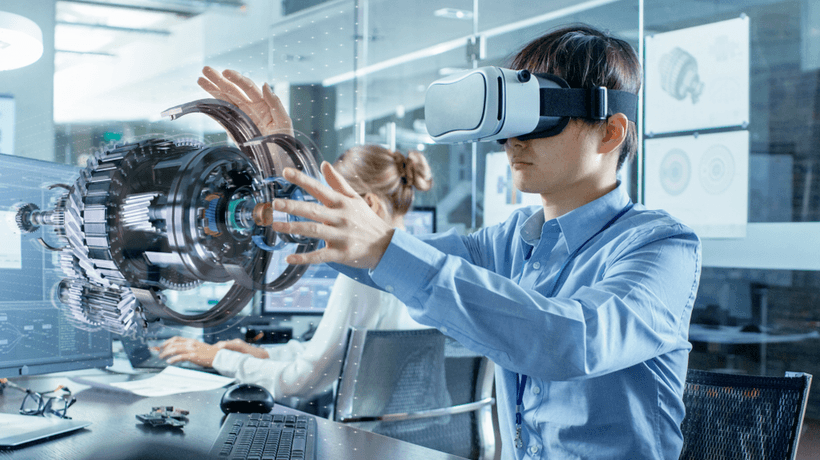
Technology is rapidly transforming the way organizations train employees, students, and professionals. Among the most innovative advancements is Virtual Reality (VR) training—a powerful, immersive learning method that simulates real-world environments in a controlled, digital space. Businesses across industries are adopting VR to improve learning outcomes, reduce training costs, and enhance safety. If you’ve ever wondered what is vr training, this comprehensive guide will explain its concept, benefits, and wide-ranging applications in today’s fast-evolving world.
What Is Virtual Reality Training?
Virtual Reality training uses computer-generated simulations to create realistic, interactive learning environments. By wearing a VR headset, users are transported into a 3D virtual world where they can practice tasks, make decisions, and experience scenarios as if they were physically present.
Unlike traditional classroom or video-based learning, VR training engages multiple senses and allows hands-on interaction. Whether operating heavy machinery, performing medical procedures, or managing customer interactions, learners can practice repeatedly without real-world risks. Understanding what is vr training is the first step toward recognizing its transformative impact on education and workforce development.
How VR Training Works
VR training systems typically consist of a headset, motion controllers, tracking sensors, and specialized software. The software recreates detailed simulations tailored to specific training objectives. These simulations can range from basic procedural tutorials to complex emergency-response scenarios.
The immersive nature of VR enhances knowledge retention by placing learners directly inside the experience. Instead of passively watching or reading, participants actively engage with the environment, making decisions and seeing the consequences of their actions in real time. This experiential approach significantly improves memory retention and practical skill development.
Key Benefits of Virtual Reality Training
Organizations are increasingly investing in VR training because of its measurable advantages over traditional methods. Below are some of the most compelling benefits:
1. Enhanced Learning Retention
Studies show that immersive learning improves retention rates compared to lectures or static content. VR allows users to learn by doing, which strengthens understanding and long-term memory.
2. Safe Learning Environment
VR simulations eliminate real-world risks. Trainees can practice hazardous tasks—such as operating machinery or responding to emergencies—without danger to themselves or others.
3. Cost Efficiency
Although initial setup may require investment, VR training reduces long-term costs associated with travel, equipment damage, and instructor-led sessions.
4. Consistent Training Experience
Every trainee experiences the same standardized scenario, ensuring uniform skill development and compliance with organizational standards.
5. Immediate Feedback and Analytics
VR platforms can track user performance, response times, and errors, providing valuable insights for improvement.
Understanding what is vr training reveals why companies are rapidly integrating this technology into their training programs.
Applications in Corporate Training
Corporate environments are one of the fastest-growing adopters of VR training solutions. Businesses use VR to train employees in areas such as:
- Workplace safety and compliance
- Customer service simulations
- Leadership and management development
- Equipment operation and maintenance
- Onboarding new hires
For example, employees can simulate challenging customer interactions or emergency evacuations in a controlled digital setting. This prepares them for real-life scenarios while reducing operational disruptions.
VR Training in Healthcare
Healthcare is another industry where VR training is revolutionizing professional development. Medical students and practitioners can practice surgical procedures, diagnose conditions, and simulate patient interactions without real-world risks.
VR allows repeated practice in high-pressure environments, building confidence and precision. It is particularly valuable for rare or complex procedures that may not frequently occur in traditional training settings. By understanding what is vr training, healthcare institutions can enhance patient safety while improving clinical competence.
Applications in Education and Academic Institutions
Educational institutions are leveraging VR to create immersive learning experiences for students. Instead of reading about historical events or scientific concepts, learners can explore virtual reconstructions of ancient civilizations or conduct interactive science experiments.
VR makes abstract concepts tangible and engaging, increasing student motivation and comprehension. From primary schools to universities, immersive learning is reshaping modern education by making lessons more interactive and memorable.
Industrial and Technical Skills Development
Manufacturing, construction, aviation, and energy sectors rely heavily on technical precision and safety compliance. VR training enables workers to practice equipment handling, machinery repair, and emergency response procedures without interrupting actual operations.
For example, trainees can simulate operating cranes, assembling components, or managing power plant systems in a virtual setting. This reduces downtime, minimizes accidents, and accelerates skill acquisition. When organizations ask what is vr training, they often discover it is the most efficient solution for complex technical instruction.
Soft Skills and Behavioral Training
Beyond technical skills, VR is highly effective for developing soft skills such as communication, teamwork, empathy, and conflict resolution. Immersive simulations allow users to experience realistic interpersonal interactions and receive feedback on their behavior.
For instance, managers can practice handling difficult employee conversations, while customer service representatives can refine their communication strategies. This experiential learning method fosters emotional intelligence and enhances workplace relationships.
Overcoming Challenges in VR Training Implementation
While VR training offers numerous advantages, successful implementation requires careful planning. Organizations must consider:
- Hardware and software compatibility
- Content customization for specific objectives
- User comfort and accessibility
- Ongoing technical support
- Integration with existing training programs
Choosing the right VR platform and development partner ensures smooth deployment and maximum return on investment. Clear objectives and measurable outcomes also help organizations evaluate the effectiveness of their VR initiatives.
Future Trends in Virtual Reality Training
The future of VR training looks promising as technology continues to evolve. Advances in artificial intelligence, haptic feedback, and cloud-based platforms are making VR more accessible and realistic.
AI-driven simulations can adapt scenarios based on user performance, creating personalized learning experiences. Haptic technology adds tactile feedback, increasing realism and engagement. As hardware becomes more affordable, even small and medium-sized businesses can adopt VR solutions.
With remote work on the rise, VR also enables collaborative virtual classrooms where participants from different locations can train together in real time. To get the most out of these sessions, many teams pair immersive VR environments with an AI meeting assistant participants can stay fully engaged in the experience. This flexibility expands opportunities for global learning and development.
Why Businesses Are Investing in VR Training
Organizations that understand what is vr training is recognize its ability to deliver measurable results. VR enhances skill acquisition, reduces risks, and boosts employee confidence. It also demonstrates a company’s commitment to innovation and continuous improvement.
By incorporating immersive training methods, businesses can stay competitive in an increasingly digital world. Employees benefit from engaging, hands-on learning experiences that prepare them for real-world challenges.
Conclusion
Virtual Reality training is transforming how individuals and organizations approach learning and development. By creating immersive, interactive simulations, VR allows learners to practice real-world tasks safely and effectively. From corporate training and healthcare to education and industrial skills development, the applications of VR are vast and continuously expanding.
Understanding what VR training is reveals its potential to improve retention, reduce costs, and enhance overall performance. As technology advances and adoption grows, VR training will play an even greater role in shaping the future of education and workforce development.
For organizations seeking innovative, efficient, and scalable training solutions, virtual reality is no longer a futuristic concept—it is a practical, results-driven tool for today’s evolving learning landscape.