
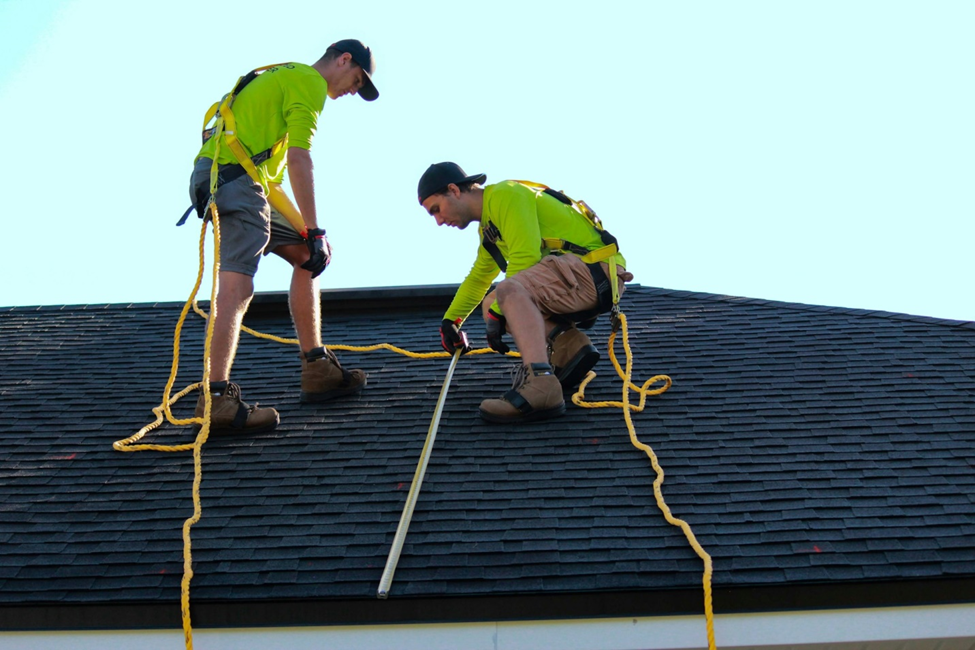
Roof problems rarely announce themselves in a clear or dramatic way. There is no alarm system, no clear break, and in most instances, nothing sufficiently important to disrupt business operations.
Instead, roofing systems tend to deteriorate quietly. In layers. Over time. Almost as though the structure is slowly taking in minor issues until they become major concerns.
In Hattiesburg, Mississippi, this becomes even clearer due to the presence of constant humidity, occasional weather storms, and prolonged heat. These conditions don’t just age roofs—they expose weak points faster than expected.
This is why Roofing companies Hattiesburg MS and experienced teams like B & A Roofing and Gutters often focus less on visible damage and more on what’s happening underneath the surface.
Weak Points Usually Begin Where No One Is Looking
Roof weaknesses don’t usually start in the center of a roof where attention is easy. They begin in areas that are overlooked during routine checks.
These include:
● Roof edges and corners
● Seams and joints between materials
● Around vents, skylights, and AC units
● Drainage channels and low spots
● Slightly uneven surface areas
All of these places have distinct reactions to pressure. They expand, shrink, and gather moisture in ways that cannot be seen immediately.
The early stage doesn’t look like damage. It looks like normal wear.
That’s where the problem begins.
This is also the stage where property owners might casually search for Roofers near me, assuming it’s a simple fix, when the issue may already be spreading internally.
Edge Areas Take the First Hit
The edges of a roof are always being affected by wind uplift, rain movement, and changing temperatures. This is why they wear out more quickly than other areas.
What usually happens over time:
● Sealants begin to dry and crack
● Material lifts slightly at the edges
● Wind pressure creates small separations
● Water finds entry during heavy rainfall
These changes are subtle. They don’t always create leaks immediately.
But they create pathways.
Once a pathway exists, moisture will eventually find it.
That is why Roofers Hattiesburg MS often inspect edges more carefully than any other section during maintenance visits.
Drainage Zones Slowly Turn Into Problem Spots
A roof can look completely fine and still have drainage issues developing underneath.
Water doesn’t need a major blockage to cause problems. Even a small slowdown is enough.
When drainage starts failing:
● Water lingers longer after rain
● Small pools form in low areas
● Roofing materials stay damp
● Surface layers weaken gradually
The danger here is time. The longer water remains stagnant, the more damage it causes to the structure below it.
At first, it looks harmless. Over months, it becomes structural stress.
This is when the need for commercial roofing companies near me arises, particularly when there is an occurrence of moisture found in other parts of the structure.
Flashing Failure Happens Quietly
Flashing may be the most crucial component of roof protection, but it can also be one that gets easily forgotten.
It protects vulnerable transition points like:
● Roof-to-wall connections
● Vent openings
● HVAC system bases
● Edge intersections
When flashing begins to weaken:
● Small gaps form
● Water enters during rainfall
● Moisture travels behind surfaces
● Damage spreads internally
The tricky part is that flashing failure rarely creates immediate visible leaks. It often takes time before the effects become noticeable inside the building.
By the time it manifests itself, it has been working away for quite a while.
Insulation Weakness Builds Without Visibility
Insulation damage is one of the quietest roofing problems.
Once moisture enters the system, insulation absorbs it slowly. This changes how the building performs thermally.
Over time, this leads to:
● Higher indoor temperature fluctuations
● Increased energy consumption
● Uneven cooling or heating zones
● Reduced HVAC efficiency
What makes this difficult is that nothing looks wrong from the inside initially.
The building just starts feeling harder to regulate.
That’s often when searches like Roofing near me increase, especially when energy bills start rising without explanation.
Surface Cracks Expand With Time, Not Immediately
Roof surfaces naturally expand in heat and contract in cooler conditions. This constant movement creates stress points.
Small cracks form as a result.
At first:
● Cracks are shallow and inactive
● No visible leaking occurs
● Surface appears stable
Over time:
● Cracks widen during weather cycles
● Moisture begins entering the layers
● Internal materials weaken
● Damage spreads outward
What makes this concerning is the delay between formation and visible impact. It creates a false sense of stability.
Weather Conditions in Hattiesburg Accelerate Weak Points
Local climate plays a major role in how fast roofing weaknesses develop.
In Hattiesburg, roofs are regularly exposed to:
● High humidity levels
● Heavy rainfall patterns
● Long, hot summers
● Frequent temperature shifts
These conditions constantly stress roofing materials.
Humidity keeps moisture trapped longer. Heat expands materials. Rain finds every weak point. Temperature swings speed up wear.
This combination makes even small weaknesses develop faster than expected.
It’s one of the reasons Roofing companies Hattiesburg MS emphasize regular inspection schedules instead of waiting for visible damage.
Weak Points Don’t Fail All at Once
Roof failure is rarely sudden. It’s gradual and layered.
The progression usually looks like this:
● Minor material weakness develops
● Moisture begins entering slowly
● Internal layers start weakening
● Visible damage appears later
● Structural issues follow if ignored
The gap between early stage and visible damage is what leads to costly repairs. During that time, the issue keeps growing silently.
This is why maintenance timing matters more than reaction speed.
Small Weak Points Lead to Large Financial Impact
The financial impact of ignored roof weaknesses doesn’t come from one repair. It builds from multiple sources:
● Repeated leak repairs
● Interior restoration costs
● Insulation replacement
● Higher energy bills
● Equipment strain from HVAC overuse
What begins as a small maintenance issue often turns into a multi-layer repair project.
That’s where businesses realize the importance of proactive support from Roofers Hattiesburg MS rather than emergency-only repairs.
Why Early Detection Changes Everything
Catching weak points early changes the entire outcome.
Early inspection helps identify:
● Edge deterioration before lifting occurs
● Drainage slowdown before pooling starts
● Flashing wear before leakage begins
● Surface cracks before expansion
Solving these problems sooner is easier, quicker, and much more cost-effective than fixing complete system damage later.
Why Professional Roofing Insight Matters
Not all roofing issues are visible from the ground or inside the building. Many weak points develop in hidden layers or hard-to-access areas.
That is why experienced firms like B & A Roofing and Gutters emphasize a thorough inspection of the whole system rather than just the surface.
Final Thoughts
Roof weak points don’t start as damage—they start as small imperfections that are easy to ignore.
Edges, drainage zones, flashing, insulation, and surface cracks all contribute to long-term deterioration when left unchecked.
Whether someone is searching for Roofing companies Hattiesburg MS, or commercial roofing near me, the real focus should always be understanding how small issues develop over time.
Because roofing problems don’t begin with failure.
They begin quietly, in places that are easy to overlook—and by the time they become visible, they’ve already been working for much longer than expected.